Burke County Dog Registration Information
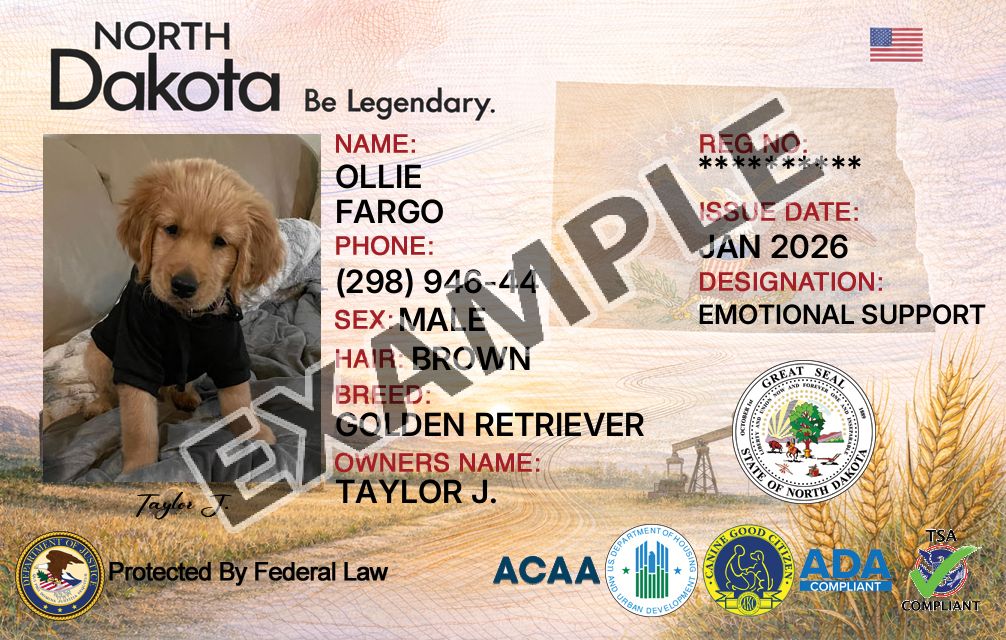
Service Dogs and Emotional Support Animals in Burke, North Dakota
If you’re searching “where do I register my dog in Burke County, North Dakota for my service dog or emotional support dog,” the key point is that there are two separate topics: (1) a local dog license in Burke County, North Dakota (or in your city), and (2) the legal status of a service dog or an emotional support animal (ESA). Dog licensing is handled locally (often by a city office if you live inside city limits), while service dog and ESA status are determined by disability and housing/airline rules—not by a universal government “registry.”
- Many communities require a dog license and will ask for proof of current rabies vaccination.
- There is no single federal registration for service dogs or emotional support animals in the United States.
- In Burke County, licensing may be handled by your city office (if you live in town) or by a county office for general animal-related questions and direction.
Where to Register or License Your Dog in Burke County, North Dakota
The offices below are official government offices serving Burke County, North Dakota residents. If you live inside a city’s limits (such as Bowbells or Powers Lake), your city may have its own licensing ordinance and licensing point of contact. If you are in an unincorporated area, start with the county office below for direction.
Burke County Auditor (Burke County Courthouse)
City of Powers Lake (City Office)
Burke County Sheriff (for animal-related complaints and enforcement direction)
Overview of Dog Licensing in Burke County, North Dakota
Dog licensing is usually local (city-by-city)
When people ask where to register a dog in Burke County, North Dakota, they often mean “Where do I get a dog license tag?” In many North Dakota communities, dog licensing is managed at the city level (for residents inside city limits) through a city auditor, clerk, or finance office. This means the rules can differ depending on whether you live in Bowbells, Powers Lake, or another city, versus a rural area outside city limits.
A dog license is not the same as a service dog or ESA “registration”
A dog license is a local pet licensing requirement used for public health and identification (often tied to rabies vaccination). Service dog status and emotional support animal status come from federal and state rules about disability access and housing—not from a one-size-fits-all registry.
What You Need Before Registering a Dog
Common items requested for a dog license
While dog licensing requirements in Burke County, North Dakota can vary by municipality, many local offices request similar documentation. Bringing the items below helps prevent delays and extra trips:
- Rabies vaccination certificate (current and signed by a veterinarian or authorized vaccinator)
- Owner identification (driver’s license or other ID)
- Proof of residency (sometimes requested, especially for city-only programs)
- Spay/neuter documentation (if the fee differs based on altered vs. unaltered pets)
- Basic dog details (name, breed/type, color/markings, sex, age, microchip number if available)
What you typically do not need
- You usually do not need “service dog registration papers” to obtain a local dog license.
- You usually do not need to buy an online certificate to prove your dog is an ESA or service dog for licensing purposes.
Steps to Register or License a Dog in Burke County, North Dakota
Step 1: Confirm whether your address is inside city limits
Dog licensing often changes depending on whether you are within a city boundary. If you are inside a city, the city office may be the issuing authority for tags. If you are in a rural area, you may need guidance from a county office or your township about any applicable rules.
Step 2: Call the correct office before you go
To avoid unnecessary trips, call the office serving your location and ask:
- Is a dog license required at my address?
- What documents do you need (rabies certificate, proof of residency, spay/neuter proof)?
- How often do I renew (annual vs. other schedule)?
- What payment types are accepted (cash, check, card)?
- Do you issue a physical tag, and when should it be worn?
Step 3: Apply and keep copies
After you submit your information and fee (if applicable), keep copies of your rabies vaccination record and any license receipt. If your community issues a tag, attach it securely to the dog’s collar.
Step 4: Update information when circumstances change
If you move within Burke County or change phone numbers, it can help to update your contact information with the issuing office. This can be especially important if a lost dog is found and the tag is used to contact the owner.
Service Dog Laws in Burke County, North Dakota
Service dogs: access rights come from training to perform tasks
A service dog is generally understood as a dog that is individually trained to do work or perform tasks for a person with a disability. The dog’s legal status is based on the handler’s disability and the dog’s training and behavior—not on a universal federal registry.
What a local license does (and does not) prove
- A dog license can show the dog is licensed locally and may be tied to rabies vaccination compliance.
- A dog license does not determine whether a dog is a service animal.
- Service dog status is not created by buying an ID card or certificate; it comes from the dog being trained to perform disability-related tasks and meeting applicable legal definitions.
Practical tip for Burke County residents
If you are licensing a service dog in Burke County, North Dakota, you may still be expected to follow the same local public health requirements (such as rabies vaccination) that apply to other dogs, unless a specific local ordinance provides an exemption. If you’re unsure, ask the office issuing the dog license for your city.
Emotional Support Animal Rules in Burke County, North Dakota
ESA status is usually about housing, not public access
Emotional support animals (ESAs) provide comfort by their presence. ESAs are most often addressed in housing situations, where documentation may be requested to support an accommodation request. ESA rules are not the same as service dog rules for public places.
ESA “registration” vs. local dog licensing
An ESA is not “registered” through one universal government registry. Separately, a municipality may still require a standard dog license for any dog residing in that jurisdiction, including dogs that are ESAs.
Local licensing still matters
If you live in a city within Burke County, North Dakota, ask your city office whether they require a dog license and whether they need proof of rabies vaccination to issue the tag. ESA status typically does not replace local licensing requirements.
Dog License vs. Service Dog vs. Emotional Support Animal (ESA)
The table below highlights the differences so you can take the right steps depending on what you mean by “registering” your dog in Burke County, North Dakota.
| Category | What it is | Who issues/recognizes it | Typical documentation | Common purpose |
|---|---|---|---|---|
| Dog license | A local licensing record and/or tag for a dog living in a city or jurisdiction. | Usually a local government office (often a city office; sometimes county-directed depending on local structure). | Often rabies vaccination proof; may request ID/residency; may ask spay/neuter proof if fees differ. | Public health compliance, identification, and local ordinance enforcement. |
| Service dog | A dog individually trained to do work/perform tasks for a person with a disability. | Recognized by law based on disability + training/behavior; not created by a universal registry. | No single required registration document; may have training records (not universally required). Local rabies/vaccination rules may still apply. | Disability-related assistance and access accommodations in many settings (subject to applicable laws and behavior control). |
| Emotional support animal (ESA) | An animal that provides comfort by presence; not the same as a task-trained service dog. | Commonly addressed through housing accommodation processes; not a universal registry. | Often a healthcare-provider letter/documentation for housing accommodation requests (requirements vary by situation). | Housing-related accommodations; generally not the same public-access status as service dogs. |
Frequently Asked Questions
Where do I register a dog in Burke County, North Dakota if I live in town?
Start with your city office (city hall / city auditor / city clerk). Many towns handle licensing locally. If you’re not sure which office issues dog tags in your municipality, call the Burke County Auditor in Bowbells and ask which local office handles licensing for your address.
Do I need proof of rabies vaccination to get a dog license in Burke County, North Dakota?
Many communities require proof of current rabies vaccination to issue or renew a license. Requirements can be city-specific, so confirm with the office that issues licenses where you live.
Is there an official federal registry for service dogs?
No. Service dog status is not established by a single federal “registry.” Local dog licensing is separate and may still be required where you live.
Is an emotional support dog registered with the county?
ESA status is typically part of a housing accommodation process rather than a county-run registry. However, your dog may still need a standard dog license if your city or jurisdiction requires it.
What if I’m outside city limits in rural Burke County?
Requirements may differ outside incorporated areas. If you’re trying to determine whether any local licensing requirement applies, start by calling the Burke County Auditor for direction. For animal-related enforcement questions (for example, bites or public safety concerns), the Burke County Sheriff can help direct you to the correct process.
What You May Need
Quick Local Guidance
If your goal is an animal control dog license in Burke County, North Dakota, start by identifying your jurisdiction:
- Inside city limits: ask your city office about dog licensing requirements in Burke County, North Dakota (city ordinances can differ).
- Outside city limits: ask the county where licensing questions are handled for rural addresses, and contact law enforcement for urgent safety issues.
Register A Dog In Other North Dakota Counties
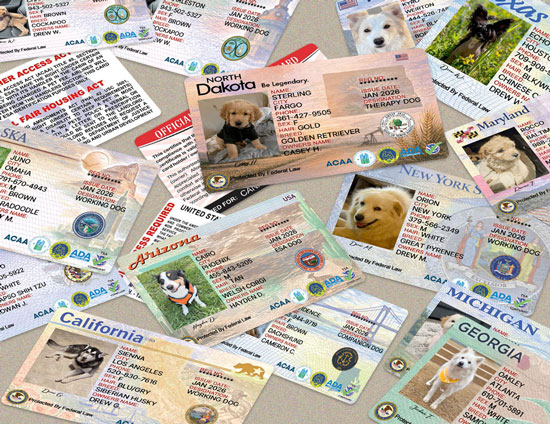
Select your county below to get started with your dog’s ID card. Requirements and license designs may vary by county, so choose your location to see the correct options and complete your pup’s registration.
- Adams County Dog Registration
- Barnes County Dog Registration
- Benson County Dog Registration
- Billings County Dog Registration
- Bottineau County Dog Registration
- Bowman County Dog Registration
- Burleigh County Dog Registration
- Cass County Dog Registration
- Cavalier County Dog Registration
- Dickey County Dog Registration
- Divide County Dog Registration
- Dunn County Dog Registration
- Eddy County Dog Registration
- Emmons County Dog Registration
- Foster County Dog Registration
- Golden Valley County Dog Registration
- Grand Forks County Dog Registration
- Grant County Dog Registration
- Griggs County Dog Registration
- Hettinger County Dog Registration
- Kidder County Dog Registration
- LaMoure County Dog Registration
- Logan County Dog Registration
- McHenry County Dog Registration
- McIntosh County Dog Registration
- McKenzie County Dog Registration
- McLean County Dog Registration
- Mercer County Dog Registration
- Morton County Dog Registration
- Mountrail County Dog Registration
- Nelson County Dog Registration
- Oliver County Dog Registration
- Pembina County Dog Registration
- Pierce County Dog Registration
- Ramsey County Dog Registration
- Ransom County Dog Registration
- Renville County Dog Registration
- Richland County Dog Registration
- Rolette County Dog Registration
- Sargent County Dog Registration
- Sheridan County Dog Registration
- Sioux County Dog Registration
- Slope County Dog Registration
- Stark County Dog Registration
- Steele County Dog Registration
- Stutsman County Dog Registration
- Towner County Dog Registration
- Traill County Dog Registration
- Walsh County Dog Registration
- Ward County Dog Registration
- Wells County Dog Registration
- Williams County Dog Registration